How to Prepare Your Kids for Conflict This School Year
Key takeaways:
- Teaching kids conflict resolution and how to communicate with respect and empathy can de-escalate conflict.
- Bystander training can teach students how to respond when they see bullying or microaggressions.
- Nearly 1 in 5 U.S. students report being bullied at school.
How to Prepare Kids for Conflict at School
Back-to-school prep that goes beyond school supplies and books
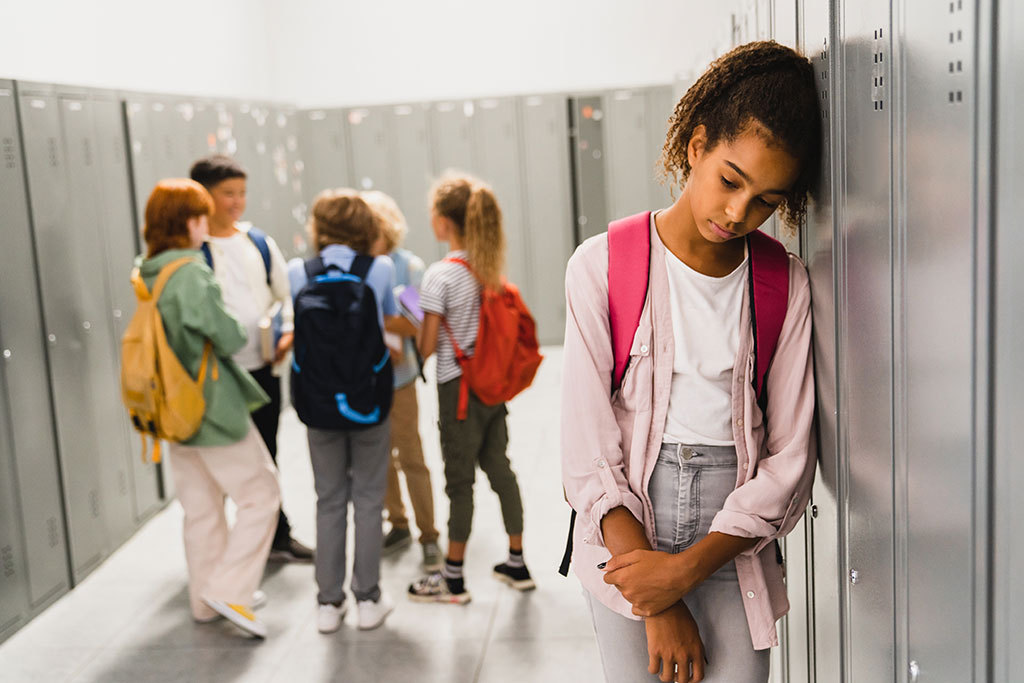
If you’re a parent, this time of year is busy with all prep for sending your kids back to school. You’re buying backpacks and supplies, making schedules, and managing big feelings that come with a new school year. At the same time, you’re probably thinking about your child’s feelings and whether they’ll deal with bullying or conflict with friends.
Tension at school and amongst friends is inevitable, especially during times of transition, such as a new school year. Knowing how to prepare kids for bullying and conflict can help reduce the friction at school and home and teach them valuable lessons about being an upstander. Keep reading for tips about how to help your kids become upstanders in their schools.
How do you prepare kids for bullying and conflict?
Your child will likely experience some type of conflict at school: a fight with friends, miscommunication with a teacher, being bullied, or witnessing someone else being bullied. Knowing what to do when these conflicts arise can boost their confidence at school and prevent the problem from escalating.
Bullying is of particular concern because it can deeply impact a child’s self-esteem and academics. Nationally, about 19% of students ages 12 to 18 reported being bullied during the 2021 to 2022 school year. That’s roughly one in five kids in the same hallways as yours, which means teaching kids conflict resolution really matters.
Friend conflict alone is a bigger source of stress than most parents realize. About 44% of teenagers say arguments with friends leave them feeling stressed, according to survey data from the American Institute of Stress. Friendships are often where kids first practice handling conflicts, long before they’re navigating bigger disagreements as adults.
One parent’s story: from little kids to middle schoolers
We recently spoke with a parent and NCRC employee who saw firsthand the impact of bystander training at her kids’ school. When her children were younger, they took NCRC’s Bystander Challenge training, which is bystander training for kids, long before she knew how it would shape them. She said:
“As they entered middle school and I heard stories about their friends being bullied, or experiencing low-level conflict and not knowing what to do, it was amazing to see them immediately have tools to use to be upstanders for others and for themselves.”
The way you communicate with your kids, and the communication tools you give your kids today, can impact them far beyond elementary school. They may show up years later when they’re in college, at work, or dealing with interpersonal conflict. Learning to be an upstander who communicates with respect and dignity will never go out of style.
This isn’t just one family’s experience, either. Research on school-based peer mediation and conflict-resolution programs consistently finds high success rates. One study of nearly 300 mediation sessions found that more than 94% ended in a resolution both students agreed to. Programs like these also tend to support de-escalation, so teachers and administrators have more time to focus on teaching.
You can’t predict every situation, but you can prepare for it
Stories like this are a reminder that teaching youth how to communicate matters—and may matter for years to come. There is no way to predict exactly what your child will face this year, but you can equip them to handle it with respect and empathy, whether that’s speaking up for a friend, walking away from tension, or telling a trusted adult.
Of course, teaching these skills doesn’t mean conflict disappears. But it can give students the confidence to speak up in tough situations and advocate for themselves and others, rather than lash out and repeat the cycle of disrespect.
For example, a student struggling in class may express their feelings to the teacher rather than hiding them and acting out in class. Or, it could be a high schooler stepping in to help two friends resolve a disagreement before it escalates. Small moments like these rarely make headlines, but over the course of a school year, they can make a big impact on the school and classroom culture, and in your child’s well-being.
Start the conversation at home
Here are a few tangible ways to get the conversation started before your kids even enter the classroom:
- Ask what they’d do if they saw a friend being left out or teased. Notice their response and gently guide them in how to be upstanders.
- Listen more than you advise. Rather than jumping in to immediately fix a tough situation at school, hear your child out. Ask them questions, get clarity, and provide a safe place for them to express their feelings.
- Remind kids that stepping in for a friend, or asking for help themselves, isn’t tattling. Teaching kids conflict resolution isn’t about a script for every situation; it’s about the confidence to respond, whatever comes up.
- Model upstander behavior at home and in your community. Kids notice how you handle disagreements with a partner, a neighbor, or even customer service on the phone. They will likely learn more simply from watching you than from you telling them how to do it.
Bring bystander training to your child’s school
As a parent, you drive major impact at your child’s school. You volunteer, hear your child’s concerns, and maybe even participate in PTA. Your perspective is valuable. If you want to learn more about how to how to prepare kids for bullying and conflict, connect with one of our knowledgeable training staff to learn about bringing bystander training to your school.
Whether it’s a single workshop for teachers or a school-wide bystander program, the sooner staff and students learn these skills, the sooner they can use them. Contact us to learn more about bystander training or customizing training for workplace professionals!
NCRC Newsletter
NCRC delivered to your inbox!