
Blueprint for Change:
A National Model for
Youth Justice Reform


The Full Report
Blueprint for Change:
A National Model for Youth Justice Reform
The National Conflict Resolution Center (NCRC) builds belonging, resilience, and justice through support for youth, families, and communities across a spectrum of institutions and experiences.
Belonging, Resilience, and Justice: A Multi-Institutional Framework for Avoiding the School to Prison Pipeline · 62 pages
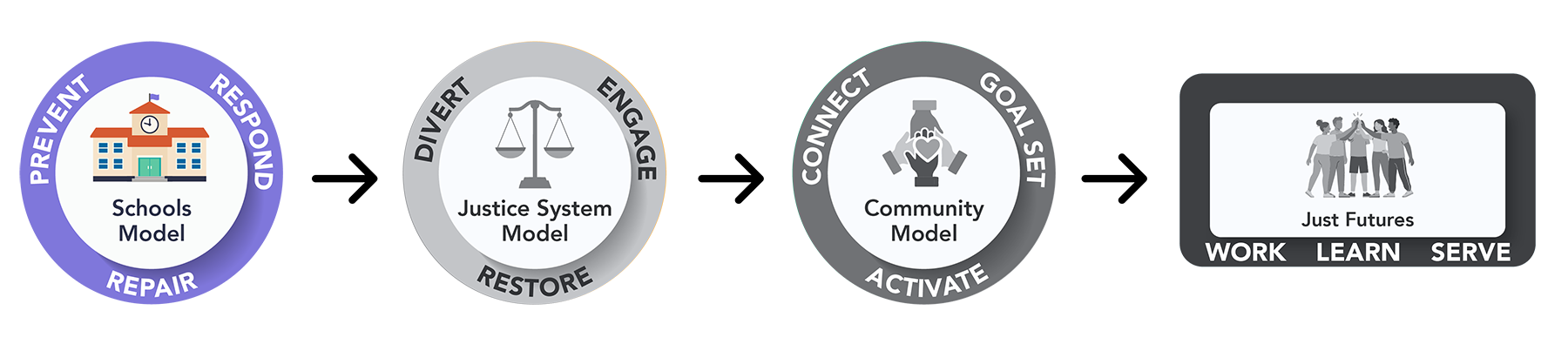

01 · Schools
Schools Model
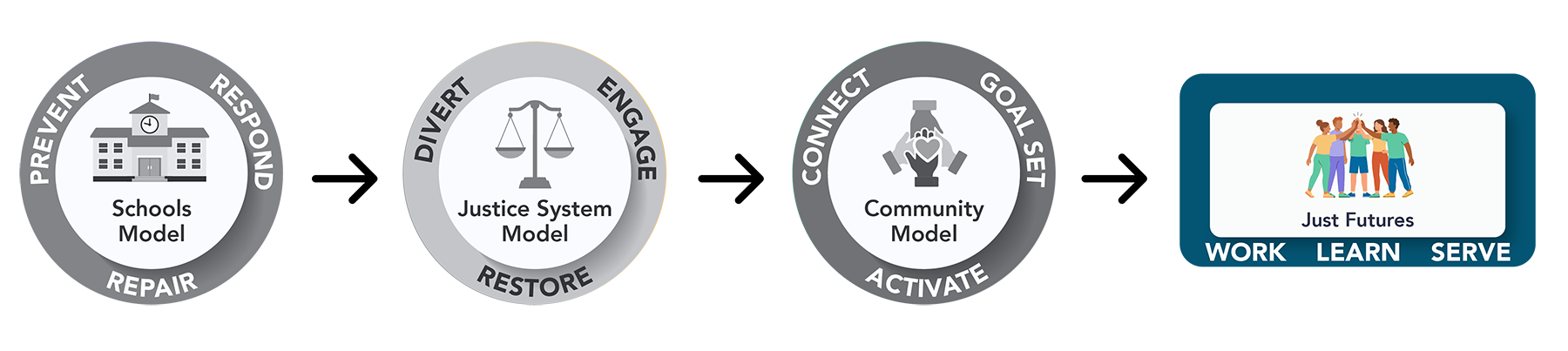
Prevent, Respond, Repair
The Schools Model is organized around three interconnected practices: preventing harm, responding effectively when conflict or harmful behavior occurs, and repairing its effects. The aim of the Schools Model is to strengthen belonging and create school environments in which harmful and exclusionary behavior is less likely to occur.
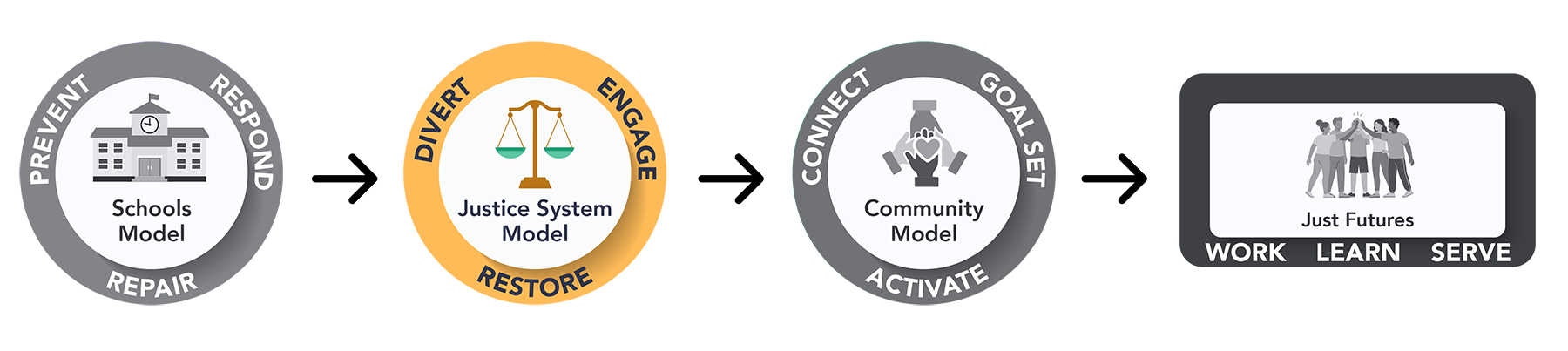
02 · Justice System
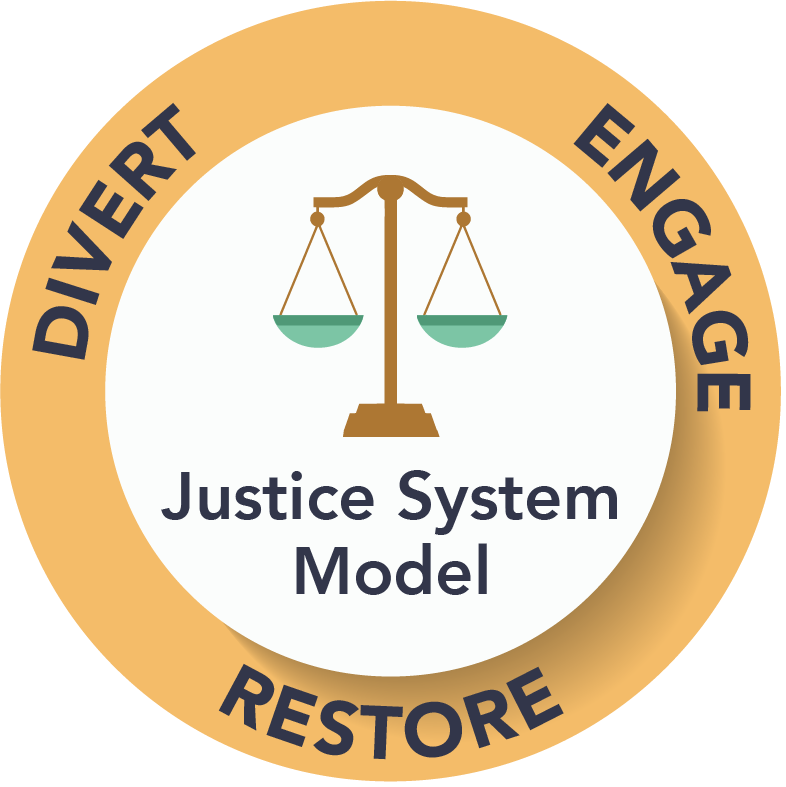
Justice System Model
Divert, Engage, Restore
The Justice System Model is built on diverting youth from the criminal legal system, engaging youth through supportive activities, and restoring the harm done to individuals and communities. The aim of the justice system model is to lower the risk of long-term harms from system impact and reduce the likelihood of recidivism.
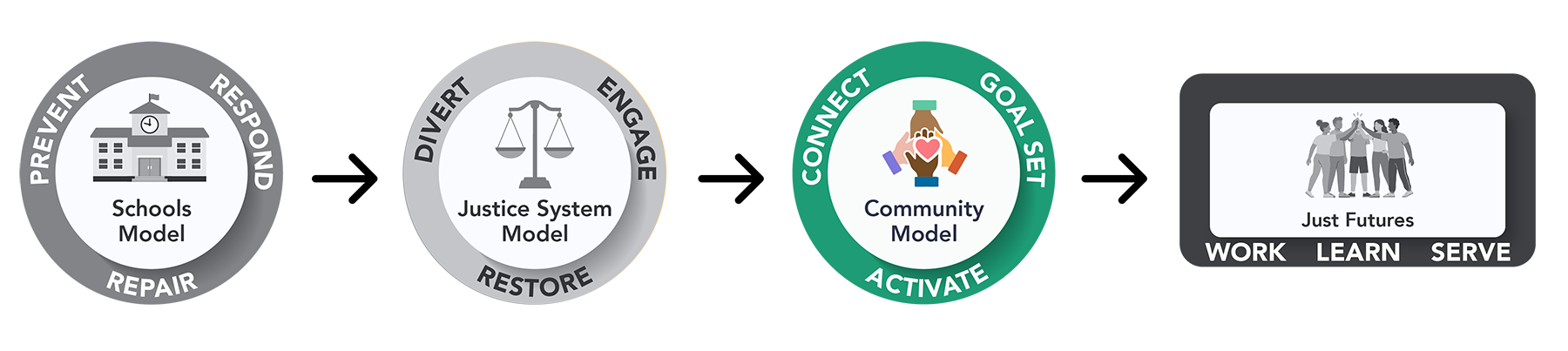
03 · Community
Community Model
Connect, Goal Set, Activate
The Community Model is organized around building connections for youth, helping youth set goals for the near and distant future, and giving youth the tools to activate the skills and resources they have gained. The aim of the Community Model is to support youth who need or want to continue the engagement they received through the Justice System Model and increase their capacity to contribute to greater belonging in school and their broader communities.
04 · Outcomes
Just Futures
Work, Learn, Serve
A just future begins with creating the conditions for young people to thrive. Belonging, resilience, and justice are the foundation; opportunities to work, learn, and serve grow from that foundation into a meaningful life.
As young people enter adulthood, education, meaningful work, and opportunities to contribute to their communities foster independence, resilience, and purpose. These capacities are deeply interconnected. Education opens doors to employment, work provides stability and resources, and together, they create opportunities for young people to support others.
Just Futures aims to ensure every young person has the capacity and opportunity to build a future worth belonging to.
Building Just Futures requires shared responsibility between schools, the justice system, and communities, so young people feel they belong, build resilience, and thrive. This framework offers a pathway for communities across the country to turn that vision into action.

Questions about the Center for Civility’s work?
hsullivan@ncrconline.com
(619) 238-2400 x237