Dialogue in Divisive Times
Get the tools to have productive, respectful conversations in the face of differences.

How to have difficult conversations
In workplaces across the country, difficult conversations are becoming more common. Current events, policy changes, politics, the rapid media cycle, and more are leading to increasing polarization in the workplace.
So, how do you have difficult conversations with people who have such different viewpoints?
The Dialogue in Divisive Times workshop from the National Conflict Resolution Center (NCRC) empowers you with practical tools and confidence to communicate respectfully even when opinions differ, and tensions run high.
This interactive workshop gives you the chance to practice your new skills in real-world scenarios, so you can approach conflict with professionalism, empathy, and purpose.
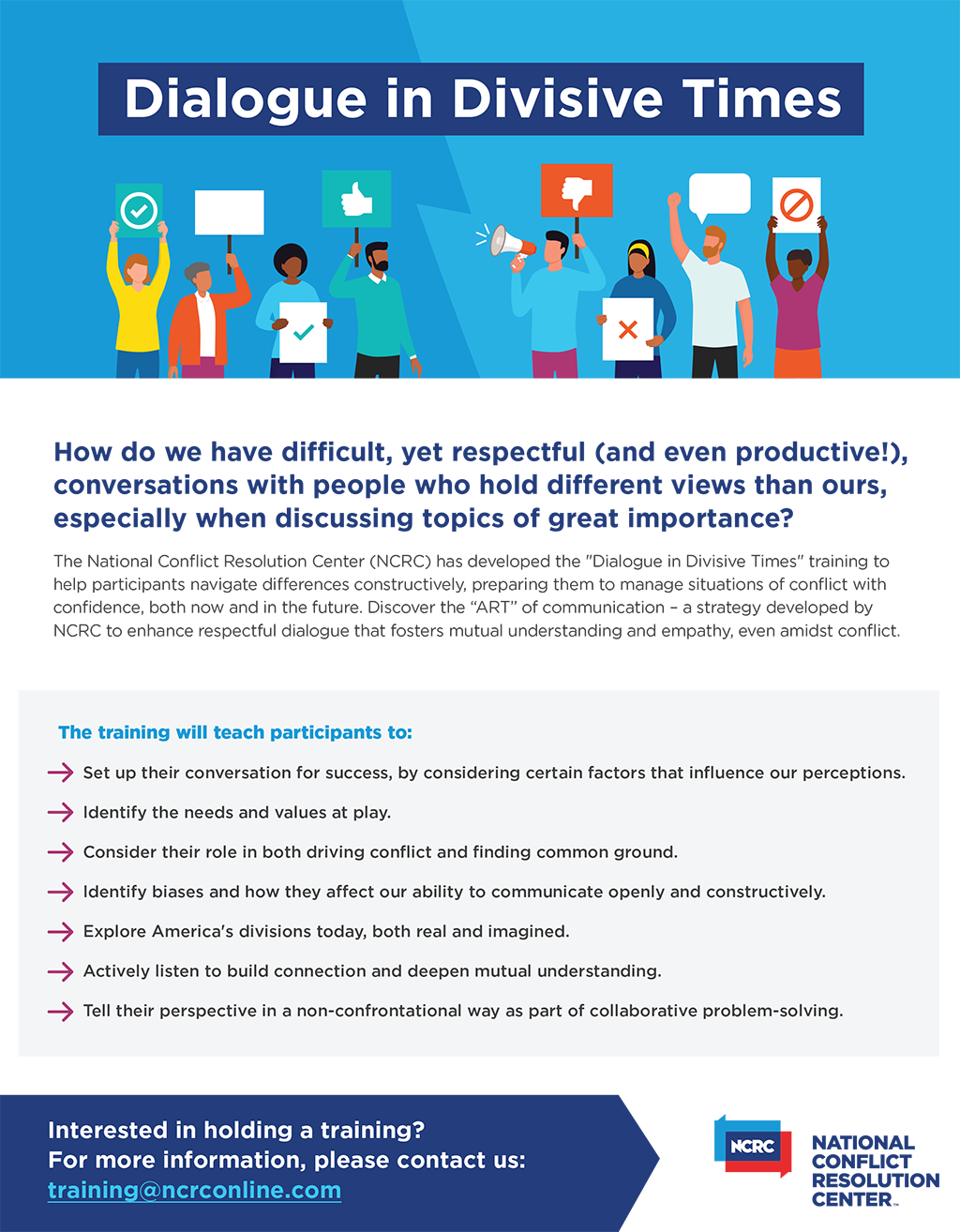

What you’ll learn in Dialogue in Divisive Times
Our hands-on workshops are led by experienced trainers who will support you in developing practical skills, including how to:
- Engage in tough conversations at work without defensiveness or shutdown.
- Express differing perspectives respectfully and clearly.
- Build trust through active listening and curiosity.
- Identify underlying concerns that drive divisive dialogue.
- Collaborate toward understanding and solution-focused next steps.

Benefits of conflict resolution training
- Strengthen workplace culture through respect and shared understanding
- Reduce tension and miscommunication across diverse teams
- Improve collaboration and problem-solving during challenging discussions
- Build confidence when having difficult conversations at work
- Equip leaders and employees with a shared framework for dialogue
- Turn divisive moments into opportunities for learning and connection
Who is this workshop for?
Dialogue in Divisive Times is a useful workshop for anyone who wants to improve their communication and conflict resolution skills, especially in polarized environments and diverse workplaces. The following groups have benefited from this workshop:
- Workplace leaders, supervisors, and managers
- Human resources professionals
- Customer-facing and frontline employees
- Educators and school administrators
- Healthcare professionals
- Government and public-service employees
- Community organizations and nonprofits


Where does the training take place?
NCRC offers flexible training options to meet your needs:
- In-person workshops: Interactive, hands-on sessions facilitated by expert trainers
- Virtual workshops: Live, online sessions with breakout rooms, engagement tools, and real-time practice
- Customize a training: Tailor a training to meet your organization’s needs, which can include Dialogue in Divisive Times, and be combined with other NCRC workshops.

Testimonials
“This workshop gave our team the confidence to engage in conversations we had been avoiding for years.”
— Program Manager
“We now have a shared language for navigating tough conversations at work. The impact was immediate.”
— HR Director
Learning how to have difficult conversations means developing the skills to discuss sensitive or divisive topics respectfully while maintaining clarity, professionalism, and mutual understanding.
This workshop is ideal for workplace leaders, organizations, community members, and frontline employees who regularly face challenging discussions or need support in having difficult conversations at work, home, and in their communities.
Yes. Dialogue in Divisive Times is available as a fully interactive virtual workshop.
Yes. NCRC customizes each workshop to align with your organization’s industry, challenges, and goals.
Participants practice real-world scenarios with the support of expert trainers, which can help reduce defensiveness, improve listening, and support productive outcomes.
This Program has been pre-approved for 2 credit hours toward aPHR®, aPHRi™, PHR®, PHRca®, SPHR®, GPHR®, PHRi™ and SPHRi™ recertification through HR Certification Institute® (HRCI®).